

Lot n° 37
Estimation :
10000 - 16000
EUR
RUMI - Lot 37
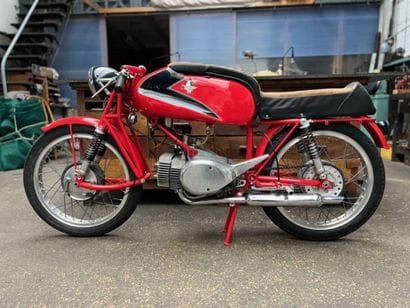
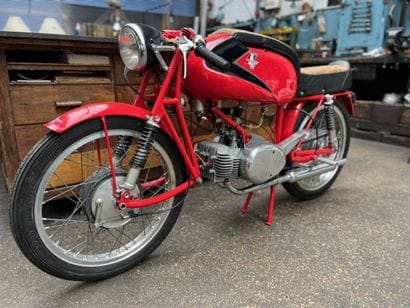
RUMI
Moto
Junior
125 cc
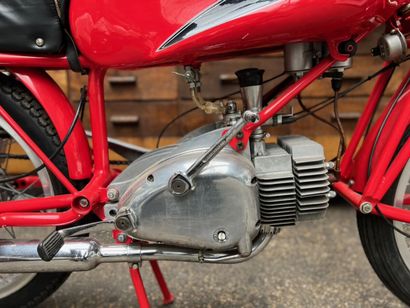
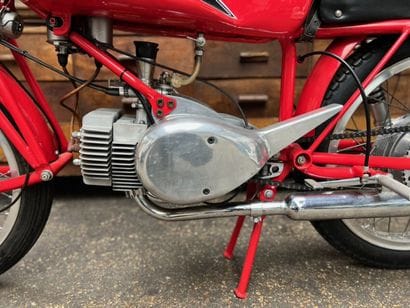
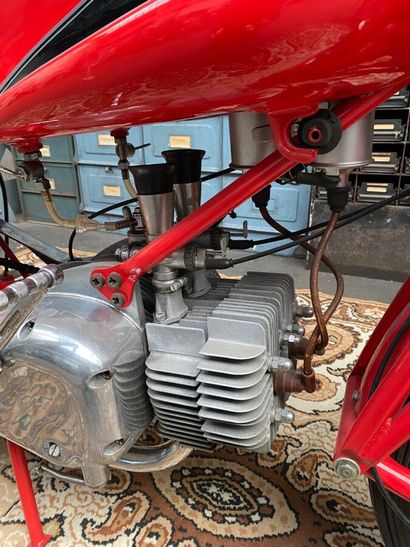
Bicylindre horizontal 2 temps 2 carburateurs
1952
N° 155SS173
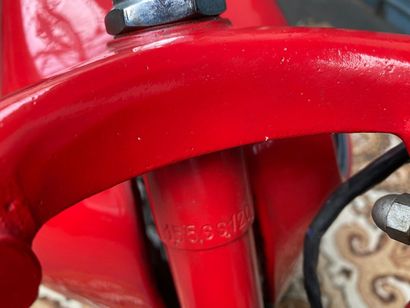
Cadre n° 155SS120
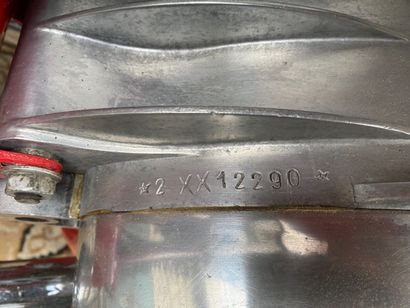
Moteur n° 2XX12290
Carte grise française de collection
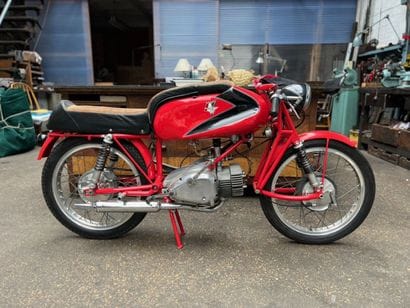
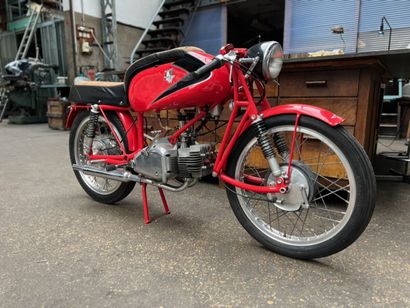
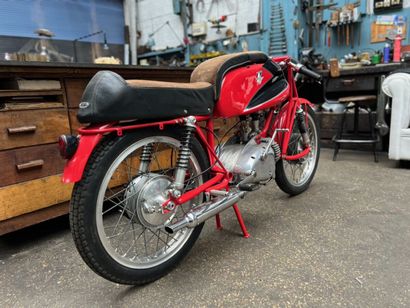
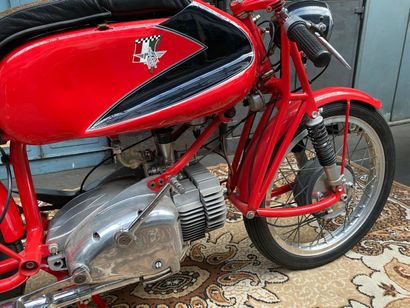
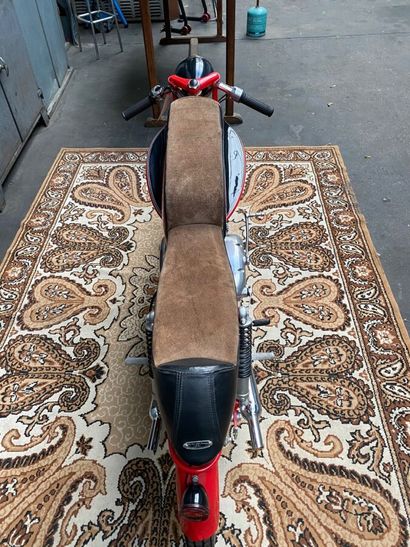
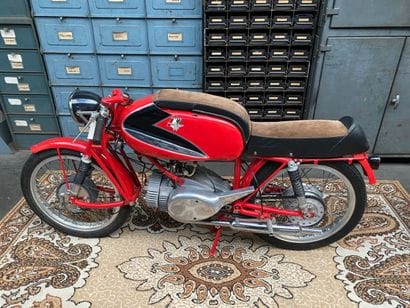
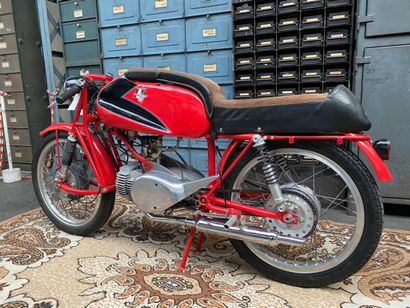
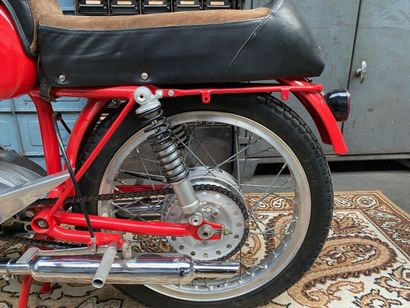
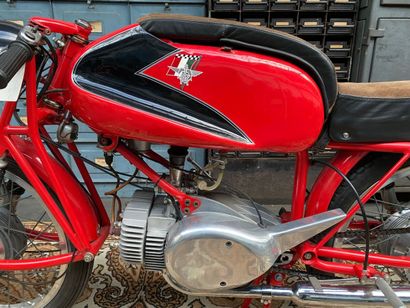
Ce junior a été acheté restauré en Italie il y a plus de 20 ans, il est à remettre en route.
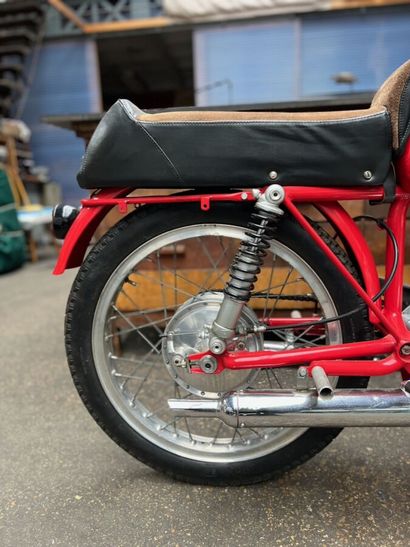
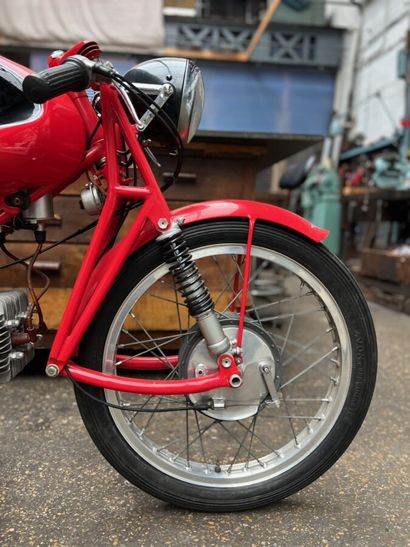
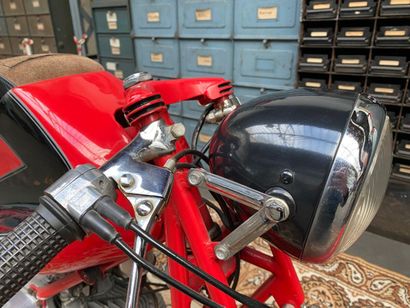
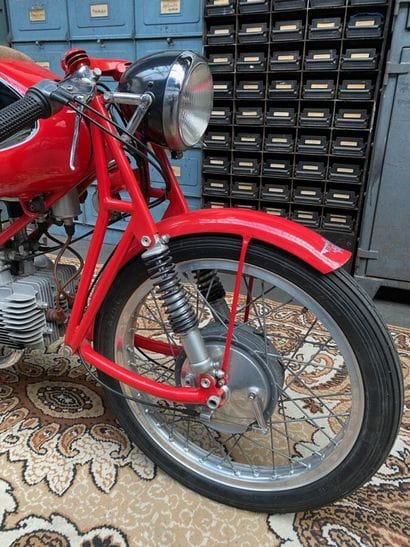
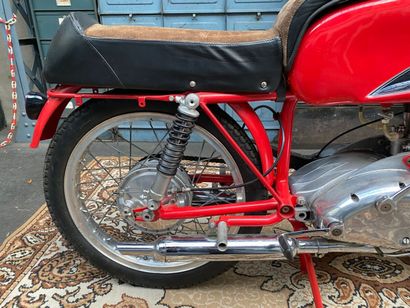
Il a l'option des amortisseurs AV et AR à gaz réglable ainsi qu'un moyeu AV en magnésium avec double plateau aluminium.
Il est dans sa version homologuée route qui permettait de faire les courses de 24h. Pres de 300 Juniors seulement furent produits.
Rumi a été fondé à Bergame, en Italie, au début du XXe siècle.
L'entreprise fournissait à l'origine des composants à l'industrie textile et pendant la Seconde Guerre mondiale, produisait des sous-marins et des torpilles miniatures.
Dirigée par Donnino RUMI, l'entreprise s'est tournée vers la fabrication de motos à la fin de la guerre, en introduisant son premier modèle Turismo en 1950.
Ce petit bijou était propulsé par ce qui allait devenir le moteur de marque de Rumi, un bicylindre parallèle de 125 cm3 dont les cylindres étaient inclinés horizontalement.
Ce moteur merveilleusement polyvalent a été utilisé pour propulser les modèles standard, Sport et Competizione, ainsi qu'une gamme de scooters très avancés.
C'est de ces derniers que l'on se souvient le mieux aujourd'hui de Rumi, notamment le Formichino (Petite Fourmi) et de ses dérivés, qui comptaient parmi les scooters les plus rapides de leur époque.
Malheureusement, malgré son innovation technique et ses prouesses en ingénierie, Rumi disparu en 1962.
Le modèle Junior fut conçu par Bruno GUIDOROSSI, dont la version Corsa (de course) a remplacé la Competizione en 1955.
Pesant à peine 85 kg (187 lb), avec neuf chevaux disponibles donnant une vitesse de pointe de 115 km/h (71 mph), le Junior a continué à utiliser les cylindres en alliage chromé et a été équipé de série de deux carburateurs Dellorto de 18 mm dû aux exigence de la nouvelle formule Italienne limitant à 18 le diamètre de ceux-ci et de pistons de compression 10,5:1.
Avec le kit de course d'usine, comprenant des carburateurs plus gros, des pistons 11,5:1 et des pots d'échappement, la vitesse passe à environ 130 km/h.
Les fourches avant Earles étaient standard mais les fourches télescopiques étaient une option.
Les amortisseurs Sturcher étaient à assistance pneumatique et comportaient un amortissement réglable aussi en option a l'AV.
Cette moto très agréable à piloter, puissante et fiable fut une moto compétition client qui s'illustra au Bol d'Or ou aux 24h de Montjuic en surpassant des 250.
Il y a eu près de 300 junior produits.
Le Junior était la moto à battre dans les courses de production sportive en Italie et en France à la fin des années 50.
En 1959, il fut à son tour remplacé par le Junior Gentleman.
My orders
Sale information
Sales conditions
Return to catalogue